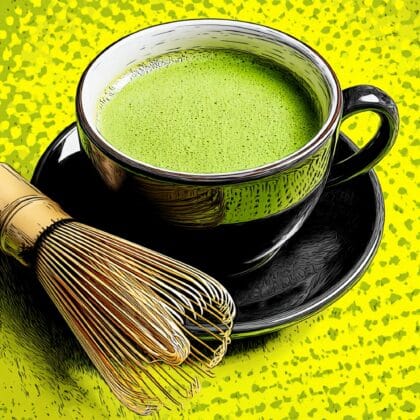
Matcha is an integral part of Japanese tea culture. In recent years, the green powder has also gained a huge following in Europe: as a drink, in baked goods and as an ingredient in modern cuisine. But how much do you really know about matcha? This free lifestyle quiz on Japan tests your knowledge of one of the most famous symbols of Japanese culture. The quiz questions are tough, and if you know the answers, you can rightly call yourself a true connoisseur.
Many more quizzes to increase your competencies!
Matcha and ordinary green tea come from the same plant, Camellia sinensis, but the difference lies not only in the taste. A crucial aspect concerns the way in which matcha is processed and prepared, which fundamentally sets it apart from any other tea. Anyone who knows what makes this difference also understands why matcha has such a special significance in Japanese tea culture. Can you say what the most important difference between matcha and normal green tea is?
Anyone who drinks matcha regularly knows the feeling: your head is clear, your thoughts are calm, but at the same time you are focused and alert. This effect is no coincidence, but has a biochemical basis. A certain ingredient in matcha is known to calm the nervous system without making you sleepy. It works closely with the caffeine contained in matcha to provide balanced, sustained energy. Do you know which ingredient is responsible for this calming effect of matcha?
The traditional preparation of matcha involves more than just powder and hot water. One particular utensil is indispensable: a bamboo tool that gives the tea its typical frothy consistency. Without this tool, the powder would hardly mix evenly with the water. It has been part of the Japanese tea ceremony for centuries and is a symbol of craftsmanship and care in the world of matcha. Do you know the name of this special bamboo whisk that whips matcha into a frothy consistency?
The tea ceremony is a central element of Japanese culture and is closely linked to the history of Zen Buddhism. Matcha was not only understood as a drink, but also as part of a spiritual ritual that emphasizes mindfulness, calm and respect. From the 12th century onwards, the ceremony developed into a highly developed art form in a particular country , which is still practised today. Can you say in which country matcha became part of the tea ceremony from the 12th century as part of Zen Buddhism?
This free lifestyle quiz on Japan about Japan shows that matcha is much more than just a trendy drink. If you know the history, ingredients and preparation, you will understand why matcha has played such a central role in Japan for centuries. Check your answers, compare them with the solutions and see how many you got right.
Matcha is cult: start the free lifestyle quiz on Japan and test your general knowledge !
26. March 26, 16:30 – Ines Walk